
Monad is the most ambitious EVM Layer 1 to ship in the last two years. The pitch is short: same Solidity, same tooling, same developer mental model — but a chain re-architected from the consensus layer up to handle workloads that the sequential EVM simply cannot. After running a Monad validator from testnet through mainnet genesis, this is our read on what the project actually is, where the ecosystem is going, and what genuinely makes it different from the other chains it's compared to.
What Monad is
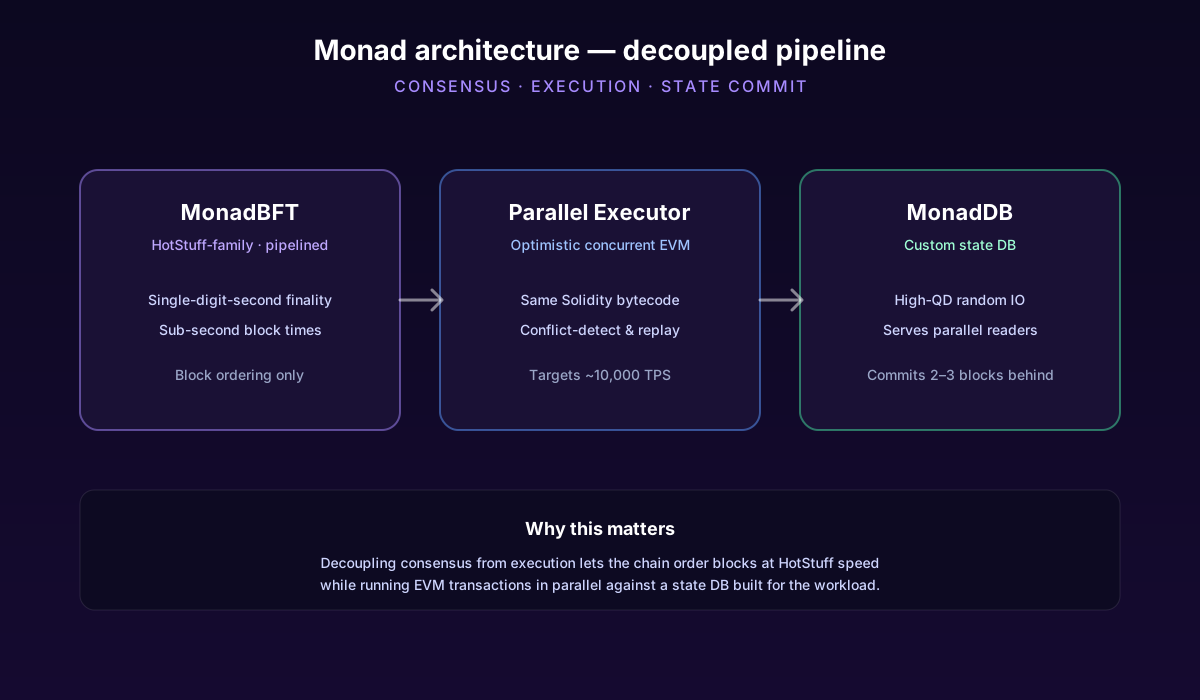
Monad is a high-performance EVM Layer 1. Underneath the EVM-compatible surface, three components do the heavy lifting:
- MonadBFT — a HotStuff-family pipelined consensus that produces blocks in well under a second and finalises in single-digit seconds.
- Parallel Executor — an optimistic concurrent execution engine that runs EVM transactions in parallel and resolves conflicts via re-execution rather than serialisation.
- MonadDB — a custom state database engineered specifically to serve parallel readers with high random-IO throughput.
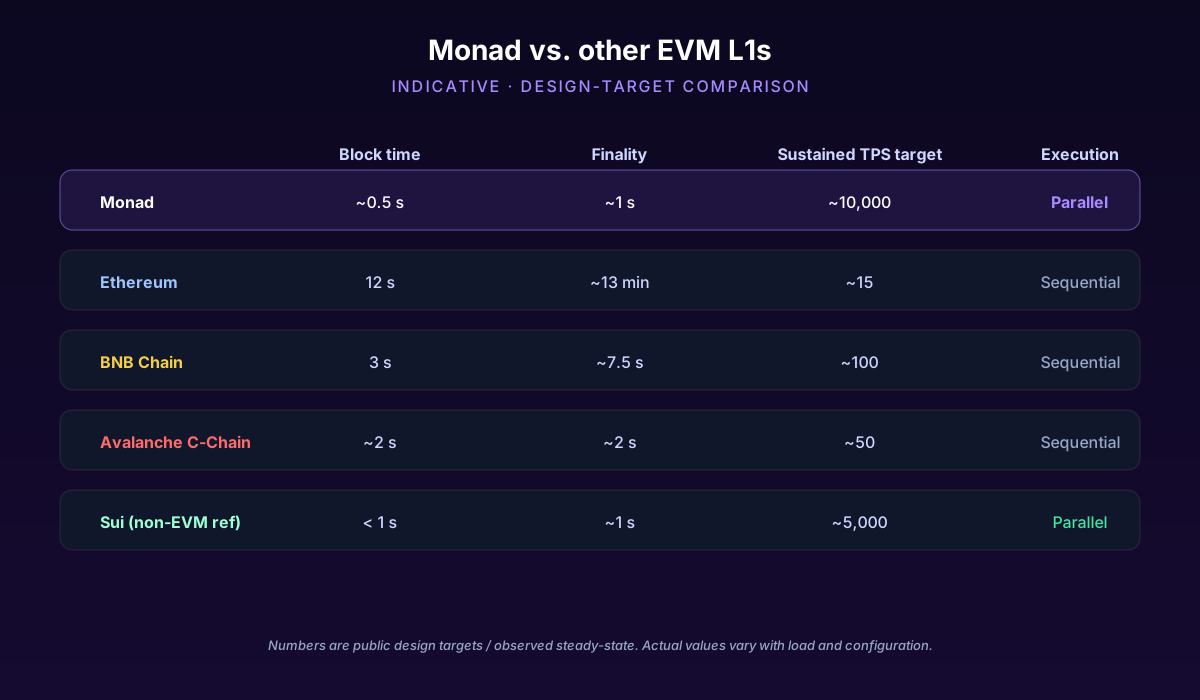
The combination is what enables Monad's design targets — roughly 10,000 TPS sustained, sub-second block time, single-digit-second finality — without breaking the EVM contract that developers depend on.
What actually makes it different
Several chains claim to be "a faster EVM." Most of them are not, in any meaningful way. Three things genuinely separate Monad from the pack.
1. Parallel execution that preserves EVM semantics
Other chains achieve throughput by changing the execution model — Solana's account model, Sui's object model, Aptos's MoveVM. Each is fast, and each forces developers to rewrite. Monad targets parallel throughput while keeping the EVM's account-and-storage semantics unchanged. Existing Solidity contracts deploy without modification, and the parallelism is achieved through optimistic execution plus dependency tracking, not through asking developers to declare their state access patterns up front.
This is genuinely hard to get right, and the engineering work to make it produce the same observable behaviour as a sequential EVM under all reorg/retry conditions is most of what Monad has been building for the last two years.
2. Decoupled pipeline
MonadBFT orders transactions and commits the block. Execution then runs against MonadDB, with state-root commitment landing a few blocks later. This pipelining is why finality can be single-digit seconds while the executor still gets enough time to resolve conflicts and build a clean state.
Most other EVM L1s couple consensus and execution tightly — a block is final only after every transaction in it has been executed and committed. Monad's decoupling is the structural reason throughput and finality can both improve at the same time.
3. A purpose-built state database
MonadDB is not RocksDB with a wrapper. It is a state engine designed for the access patterns parallel execution actually generates — high queue-depth random IO, multiple concurrent readers, snapshot semantics that don't serialise. This is the unsexy half of the project, and it's also the half that determines whether the design holds up at the throughput Monad targets.
Ecosystem development
An L1 is only as good as what gets built on it. Monad's ecosystem traction through 2025 and into 2026 has been broader than the testnet hype implied — and meaningfully different in shape from a typical "new EVM L1" launch.
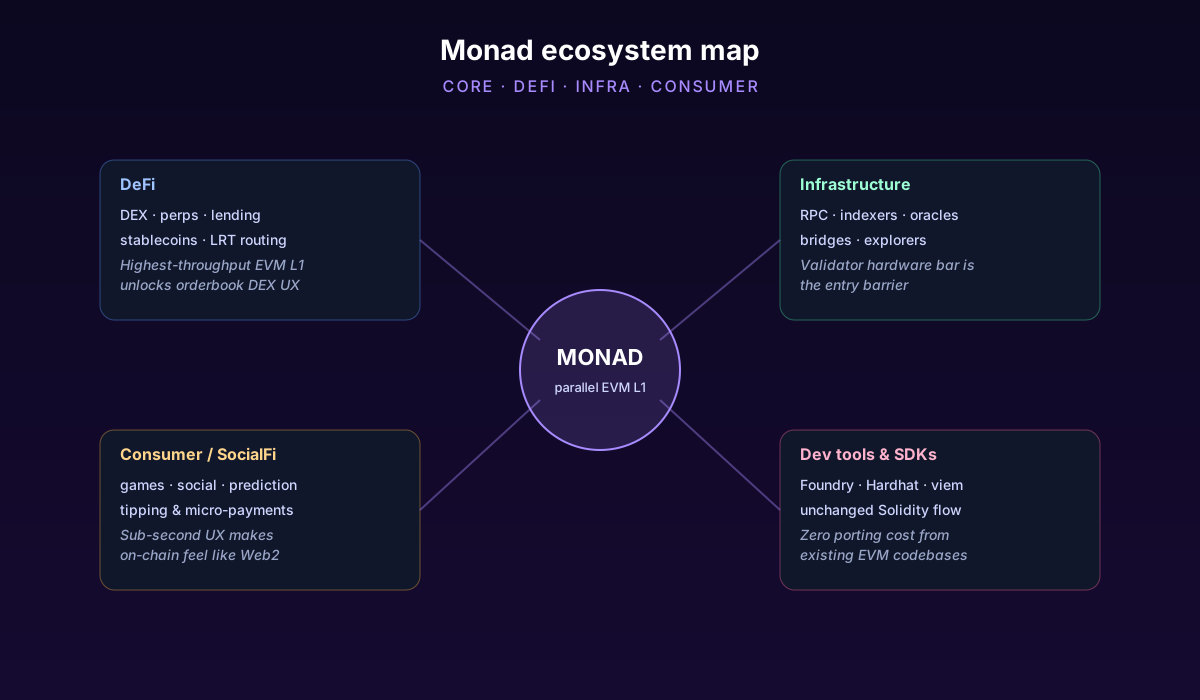
- DeFi natives — orderbook DEX teams that couldn't run on Ethereum at the latency they wanted are deploying on Monad. Perps, lending and high-throughput stablecoin rails are visibly forming.
- Consumer and SocialFi — sub-second confirmations make on-chain games and social interactions feel native. A class of applications that were uneconomic on every other EVM are viable here.
- Infrastructure — RPC providers, indexers, oracles and bridges have prioritised Monad coverage. The validator hardware bar is real, but it has filtered for serious operators rather than discouraging the field.
- Developer tools — Foundry, Hardhat, viem and the rest of the EVM tooling stack work without modification. Porting cost from an existing EVM codebase is essentially zero.
Where the bets get decided
Honest about what's still open:
- Application set. The chain has the throughput. Whether the killer app surfaces in DeFi, in consumer, or in something we're not predicting will determine the trajectory through 2026 and 2027.
- Validator decentralisation. The hardware economics favour well-capitalised operators. How the chain addresses this — through proposer rewards, set rotation, or other mechanisms — matters more than the TPS number.
- MEV middleware. Builder marketplaces, in-protocol ordering, or some Monad-specific solution will land. Which one wins shapes the chain's economics for years.
None of these are deal-breakers. They are the questions a serious chain has when the engineering core is solved.
Why we're invested in Monad
NodeStake is a Monad mainnet validator and has received a delegation from the Monad Foundation. We've been operating on Monad since the testnet phase, and we moved to production on genesis height — not as a new integration but as a promotion of infrastructure we already knew how to run.
We chose to invest deeply in Monad because the chain is doing the hard part: shipping a re-architected EVM that holds up under load, with developer ergonomics that don't require the ecosystem to start over. That combination is rare.
Stake $MON with NodeStake on Monad Vision:
https://monadvision.com/validator/0x07998b82235328D6243A7a280b662dDdaac6d0a2
Closing read
Most "new EVM L1" projects compete on a single axis — fees, throughput, finality — and ask developers to overlook the rest. Monad's bet is that the EVM stays the dominant smart-contract platform, and that the right way to scale it is to rebuild what's beneath it. Eighteen months in, that bet looks correct. The ecosystem will decide whether the throughput finds its application set, but the foundation is one of the most credible we've operated on.
About NodeStake
NodeStake is an institutional-grade validator and infrastructure operator running 50+ networks with $420M+ in delegated stake. Founded in 2019 with a perfect no-slashing record, we operate the full stack — validators, IBC relayers, public RPC endpoints, snapshots, and custom chain infrastructure — for protocols, foundations and institutional delegators across the Cosmos, EVM and emerging L1 ecosystems.
Website: https://nodestake.org
X / Twitter: https://x.com/NodeStake_top