
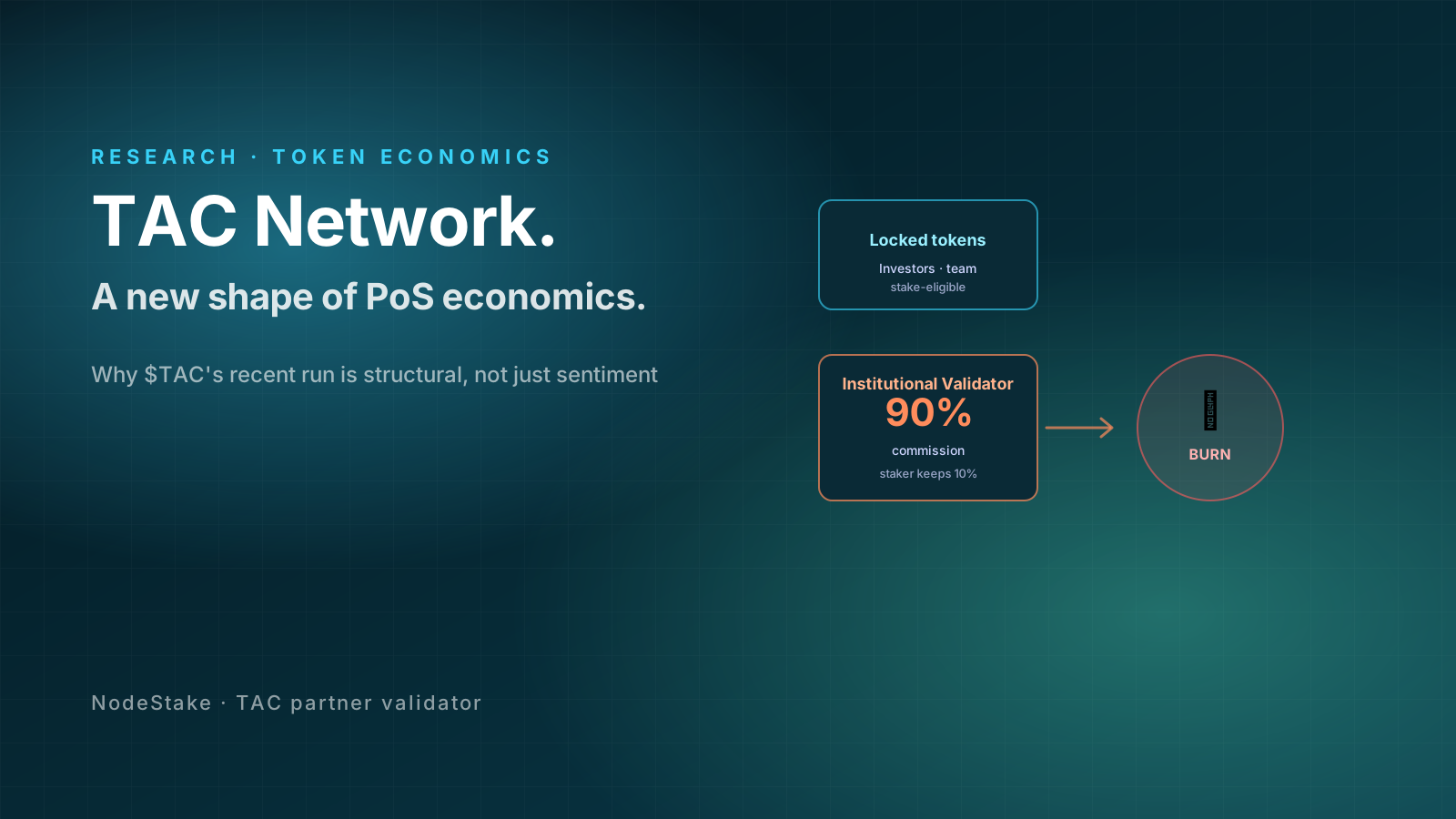
TAC has been one of the more talked-about chains in 2026, and recent price action has put a spotlight on tokenomics that most observers haven't actually unpacked. We've been a TAC partner validator since the early mainnet window — running both classes of validator the chain ships — and this is the operator-side read on what's actually different here.
Nothing in this post is financial advice. It is structural commentary on a design we operate inside.
Why TAC's tokenomics matter
Most PoS chains have the same dirty secret: a meaningful fraction of inflation lands in the hands of investors and team allocations whose tokens are locked but eligible to stake. Those stakers earn rewards in liquid tokens, and the liquid rewards become sell pressure regardless of whether the underlying allocation has unlocked. The headline APR of a typical PoS chain is, in part, a transfer from buyers to insiders.
TAC's design directly attacks this. The chain runs two distinct classes of validator with different commission structures and different reward destinations. The result is a network where locked-allocation staking does not generate sell pressure — and where retail stakers earn the full PoS yield they should.
The dual-validator design
The mechanism is simple, and elegant once you see it laid out:
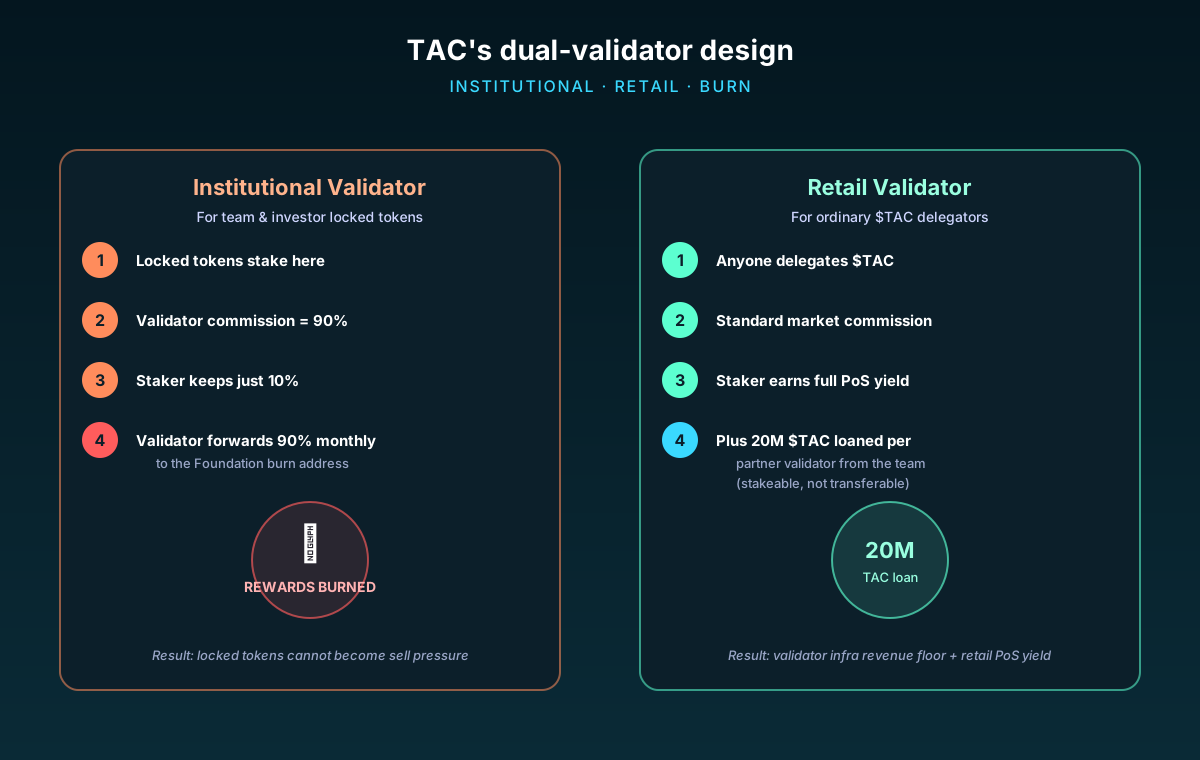
- An institutional class of validator exists specifically for staking by team and early-investor allocations whose tokens are locked. These validators are configured with a 90% commission rate.
- A retail class of validator exists for ordinary $TAC delegators. These run on standard market-rate commissions, the way every other PoS chain does.
- Locked-allocation stakers can technically still stake — but they only keep 10% of rewards. The other 90% is forwarded by the institutional validator, monthly, to a Foundation-controlled burn address.
- Retail stakers — actual $TAC holders who participate in network security — earn the full PoS yield they expect.
The 20M $TAC loan to partner validators
Designing a chain where a meaningful fraction of inflation gets burned creates an obvious risk: validators on the retail side might not earn enough to cover institutional-grade infrastructure. TAC's response to this is also non-standard, and we think it's the right one.
Each TAC partner validator is loaned 20,000,000 $TAC by the team. The validator does not own those tokens — they cannot be transferred or sold. They can, however, be staked to the validator's own retail set, where they earn the standard PoS reward. That reward stream is what gives partner validators the revenue floor needed to keep enterprise-grade infrastructure running while the network bootstraps.
The loan is structural support, not a giveaway. The principal stays with the team. The reward stream funds operations.
What this changes about PoS sell pressure
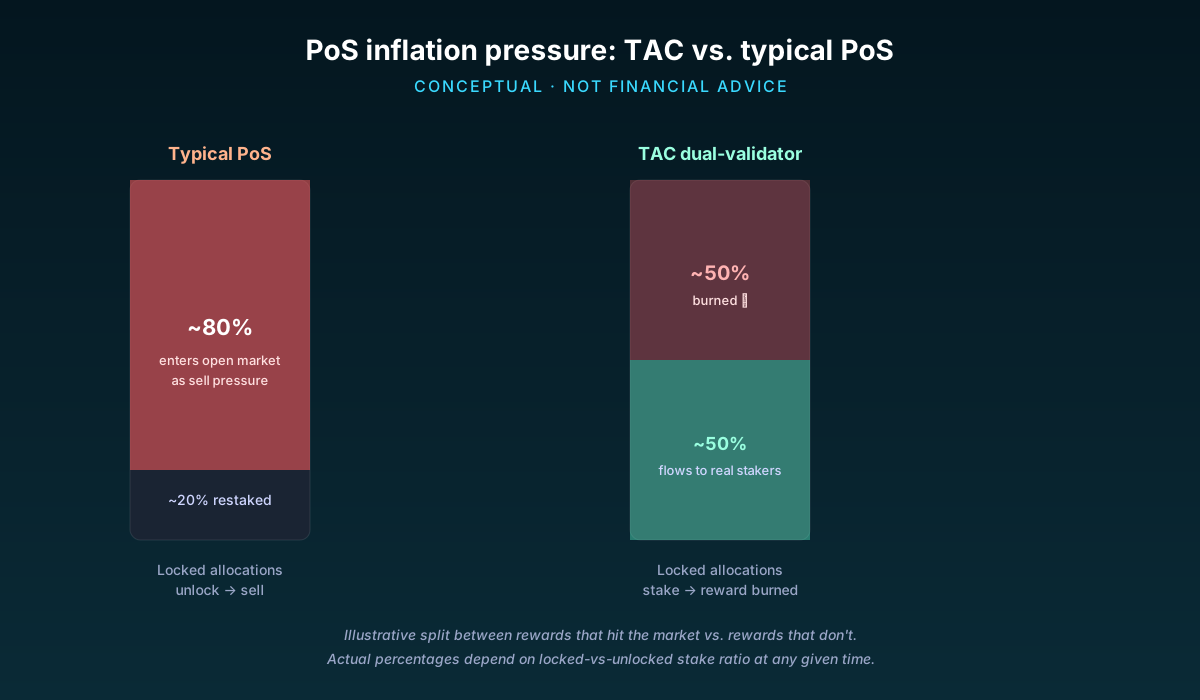
On a typical PoS chain, you can roughly split inflation into two buckets: rewards that reach genuine long-term holders (and tend to compound on-chain) and rewards that reach holders who will sell. The second bucket is the chain's structural sell pressure floor.
TAC's design materially shrinks the second bucket. Locked-allocation rewards — which would otherwise be the largest contributor to that bucket on a chain with significant team and investor allocations — are burned rather than circulated. The retail bucket still exists and behaves normally. The institutional bucket essentially disappears from the supply-pressure calculation.
On the recent run (not financial advice)
$TAC's recent appreciation has invited a lot of explanations. The structural read — and the only one we can speak to with any conviction, as operators inside the system — is that the market is starting to price the design rather than the narrative. A few observations worth noting:
- As locked allocations begin staking through the institutional path, the realised burn rate becomes a measurable on-chain figure. That changes how the supply curve is modelled.
- Retail stakers are not penalised by the institutional path. The two coexist, which avoids the usual "good for insiders, bad for the rest" trade-off that plagues novel PoS designs.
- The 20M loan to partner validators removes a common failure mode where operators quietly cut corners on infrastructure as commission compresses. Validator-side stability tends to be a leading indicator of chain quality.
None of this is a price prediction. Markets do what markets do. What we can say is that the structural reasons price could re-rate as the model becomes legible are real, and they are reasons no other PoS chain we operate on has.
A model worth borrowing
TAC's dual-validator design is one of the more genuinely innovative contributions to PoS economics we've seen in years. It addresses three constituencies at once:
- Investors and team — keep the right to stake locked tokens, but their rewards do not become sell pressure.
- Retail holders — earn the full PoS yield without being diluted by insider rewards.
- Validators — get a sustainable revenue floor (via the 20M loan) so the network's infrastructure quality holds even as commission economics compress.
This pattern is portable. Other PoS networks struggling with the same insider-vs-retail tension could learn a great deal from how TAC has structured this. We expect to see variants of this design adopted elsewhere over the next two years.
How NodeStake fits in
NodeStake is a TAC partner validator. We operate both validator classes — the institutional path and the retail path — using the same SRE rotation, monitoring stack and key-management discipline that runs the 50+ networks we already secure.
Stake $TAC with NodeStake on the official staking app:
Closing read
Most token-economic innovation in PoS over the last few years has been incremental — slightly different inflation schedules, slightly different fee burns, marginal commission tweaks. TAC's design is the first in a while that meaningfully restructures who gets which class of reward, and what happens to rewards that would otherwise become sell pressure.
Whether the market continues to reward this remains to be seen. The design itself is sound, and we think it deserves to be studied — both by builders considering similar structures and by allocators trying to understand why a chain's price action might decouple from generic PoS norms.
About NodeStake
NodeStake is an institutional-grade validator and infrastructure operator running 50+ networks with $420M+ in delegated stake. Founded in 2019 with a perfect no-slashing record, we operate the full stack — validators, IBC relayers, public RPC endpoints, snapshots, and custom chain infrastructure — for protocols, foundations and institutional delegators across the Cosmos, EVM and emerging L1 ecosystems.
Website: https://nodestake.org
X / Twitter: https://x.com/NodeStake_top